Deep Learning Decoded: Foundations, Applications, and the Road Ahead
Learn how to create visually stunning designs that remain functional, ensuring user needs are met without compromising aesthetics.
Insights
Apr 5, 2025

1. Introduction to Deep Learning
Deep learning is a subset of machine learning focused on neural networks with multiple layers that mimic the human brain's processing.
It excels at handling large, complex datasets such as images, audio, and natural language.
Popular frameworks include TensorFlow, PyTorch, and Keras, which make building and training deep models more accessible.
Deep learning's ability to learn intricate patterns has revolutionized AI research and applications.

2. Fundamentals of Neural Networks
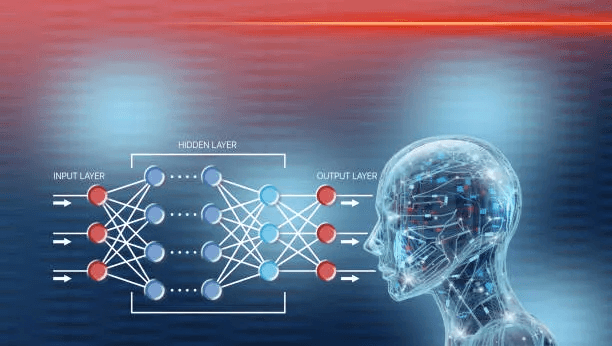
Neural networks consist of interconnected nodes (“neurons”) organized into input, hidden, and output layers.
Layers extract and transform features at increasing levels of abstraction, enhancing learning capacity.
Backpropagation and gradient descent are key techniques for optimizing network weights.
Activation functions like ReLU, Sigmoid, and Softmax play crucial roles in modeling nonlinear relationships.

3. Key Applications of Deep Learning
Image and speech recognition systems rely on deep convolutional and recurrent neural networks.
Natural language processing (NLP) tasks—such as translation, chatbots, and sentiment analysis—use deep models for superior results.
Autonomous driving, robotics, and medical diagnostics leverage deep learning for smart, real-time decision-making.
Deep learning powers generative AI for art, music, and content creation.
4. Challenges in Deep Learning
Training deep networks requires massive computational resources and high-quality labeled data.
Overfitting, vanishing gradients, and interpretability remain major technical hurdles.
Model transparency is crucial in fields like healthcare, finance, and law where decisions must be explainable.
Efficient deployment of deep models calls for optimization techniques such as pruning and quantization.

More to Discover

Deep Learning Decoded: Foundations, Applications, and the Road Ahead
Learn how to create visually stunning designs that remain functional, ensuring user needs are met without compromising aesthetics.
Insights
Apr 5, 2025
1. Introduction to Deep Learning
Deep learning is a subset of machine learning focused on neural networks with multiple layers that mimic the human brain's processing.
It excels at handling large, complex datasets such as images, audio, and natural language.
Popular frameworks include TensorFlow, PyTorch, and Keras, which make building and training deep models more accessible.
Deep learning's ability to learn intricate patterns has revolutionized AI research and applications.
2. Fundamentals of Neural Networks
Neural networks consist of interconnected nodes (“neurons”) organized into input, hidden, and output layers.
Layers extract and transform features at increasing levels of abstraction, enhancing learning capacity.
Backpropagation and gradient descent are key techniques for optimizing network weights.
Activation functions like ReLU, Sigmoid, and Softmax play crucial roles in modeling nonlinear relationships.
3. Key Applications of Deep Learning
Image and speech recognition systems rely on deep convolutional and recurrent neural networks.
Natural language processing (NLP) tasks—such as translation, chatbots, and sentiment analysis—use deep models for superior results.
Autonomous driving, robotics, and medical diagnostics leverage deep learning for smart, real-time decision-making.
Deep learning powers generative AI for art, music, and content creation.
4. Challenges in Deep Learning
Training deep networks requires massive computational resources and high-quality labeled data.
Overfitting, vanishing gradients, and interpretability remain major technical hurdles.
Model transparency is crucial in fields like healthcare, finance, and law where decisions must be explainable.
Efficient deployment of deep models calls for optimization techniques such as pruning and quantization.
More to Discover
Deep Learning Decoded: Foundations, Applications, and the Road Ahead
Learn how to create visually stunning designs that remain functional, ensuring user needs are met without compromising aesthetics.
Insights
Apr 5, 2025
1. Introduction to Deep Learning
Deep learning is a subset of machine learning focused on neural networks with multiple layers that mimic the human brain's processing.
It excels at handling large, complex datasets such as images, audio, and natural language.
Popular frameworks include TensorFlow, PyTorch, and Keras, which make building and training deep models more accessible.
Deep learning's ability to learn intricate patterns has revolutionized AI research and applications.
2. Fundamentals of Neural Networks
Neural networks consist of interconnected nodes (“neurons”) organized into input, hidden, and output layers.
Layers extract and transform features at increasing levels of abstraction, enhancing learning capacity.
Backpropagation and gradient descent are key techniques for optimizing network weights.
Activation functions like ReLU, Sigmoid, and Softmax play crucial roles in modeling nonlinear relationships.
3. Key Applications of Deep Learning
Image and speech recognition systems rely on deep convolutional and recurrent neural networks.
Natural language processing (NLP) tasks—such as translation, chatbots, and sentiment analysis—use deep models for superior results.
Autonomous driving, robotics, and medical diagnostics leverage deep learning for smart, real-time decision-making.
Deep learning powers generative AI for art, music, and content creation.
4. Challenges in Deep Learning
Training deep networks requires massive computational resources and high-quality labeled data.
Overfitting, vanishing gradients, and interpretability remain major technical hurdles.
Model transparency is crucial in fields like healthcare, finance, and law where decisions must be explainable.
Efficient deployment of deep models calls for optimization techniques such as pruning and quantization.